Dropshipping toys means customers buy toys from your store, while your supplier ships the orders directly to them. This guide covers toy ideas for 2026, how to choose products, estimate costs, check safety requirements, and set up your store. Categories include STEM kits, plush toys, craft sets, pretend-play toys, collectibles, and outdoor toys.
Key Takeaways
- Choose toy categories based on your target audience, safety requirements, shipping risks, repeat-purchase potential, and the content you can create.
- Calculate what remains after advertising, payment processing, platform fees, shipping, and expected returns instead of looking at gross profit alone.
- Check the official safety rules for your target market, especially when selling toys designed for children.
- EPROLO can help with product sourcing and fulfillment. Required product documents vary by item, supplier, seller responsibilities, and destination market.
Table of Contents
Is Toy Dropshipping Profitable?
Toy dropshipping financial results depend on your audience, product choices, and full order costs. Avoid fragile or higher-risk products, and set prices based on the full cost of getting an order to the customer. Toys do not always have high margins. Prices are easy to compare, some products sell mainly in certain seasons, and unclear details about size, age range, color, or delivery can lead to returns.
Here is a hypothetical example in US dollars. If a customer pays $35, and the order costs $12 for the product, $5 for shipping, $1.35 for payment processing, $0.70 in variable platform fees, $7 in advertising, and an estimated $1.40 for returns or refunds, the remaining contribution is $7.55. If product and shipping costs are counted as cost of goods sold, gross profit is $18 before the other selling costs. (These figures are for illustration only and are not industry averages or a forecast.)
Contribution is not the same as net profit. Net profit also accounts for fixed costs, overhead, software, labor, taxes, and other business expenses. Avoid counting the same refund twice—for example, through both an estimated return allowance and the actual refunded order. An item with $18 in gross profit can leave little contribution if advertising costs rise, returns are frequent, or customers report quality problems. A lower-priced craft kit may be worth evaluating if it reaches a clear audience and is less likely to be damaged in transit.
Best Toys to Dropship in 2026
Toys worth considering for dropshipping are not necessarily the most eye-catching products online. Look for toys with a clear target buyer, easy-to-understand product details, reasonable shipping costs, and value customers can recognize. The categories below are starting points for a 2026 catalog. Check each individual product before listing it.
| Toy Category | Example Products | Potential Advantages | Key Considerations |
|---|---|---|---|
| Educational and STEM toys | Circuit kits, magnet tile sets, counting bears, pattern boards | Strong explanation content and giftability | Age labels, instructions, small parts, battery claims |
| Montessori-inspired and wooden toys | Wooden puzzles, stacking rings, sorting boxes, shape sorters | Premium look and bundle potential | Finish, splinters, paint, durability, shipping weight |
| Plush toys and dolls | Animal plush, rag dolls, doll outfits, mini blankets, carry bags | Emotional appeal and repeat themes | Seams, stuffing, choking hazards, IP risk |
| Puzzles, board games, and building blocks | Jigsaw puzzles, family games, construction sets, block kits | Clear images, bundles, and difficulty levels | Missing pieces, complexity, packaged dimensions, trademarks |
| Arts, crafts, and creative toys | Drawing kits, reusable writing tablets, bead sets, clay kits | Consumable add-ons and video demos | Materials, instructions, replacement parts, consumables |
| Pretend-play and role-play toys | Doctor kits, play kitchens, tool benches, shopping sets, costumes | Strong lifestyle photography and bundles | Complete set contents, dimensions, age, shipping bulk |
| Fidget and sensory toys | Pop tubes, squishy balls, textured rings, spinner cubes | Low ticket, impulse-friendly, easy bundles | Material quality, age appropriateness, small parts |
| Toy cars, action figures, and collectibles | Generic die-cast cars, robot figures, storage cases, display stands | Series merchandising and complementary products | Competition, licensing, dimensions, fragile packaging |
| Outdoor, water, and electronic toys | Bubble machines, splash mats, foam launchers, LED drawing boards | Higher perceived value and seasonal spikes | Batteries, electrical safety, carrier rules, size, seasonality |
Educational and STEM Toys
Educational and STEM toys may appeal to parents looking for activities that combine play and learning. Avoid promising specific results. Instead, explain what the toy does, its recommended age range, what is included, and whether adult supervision is needed. Options include simple experiment kits, counting games, pattern boards, beginner engineering sets, and logic games. Show clear photos of all components.
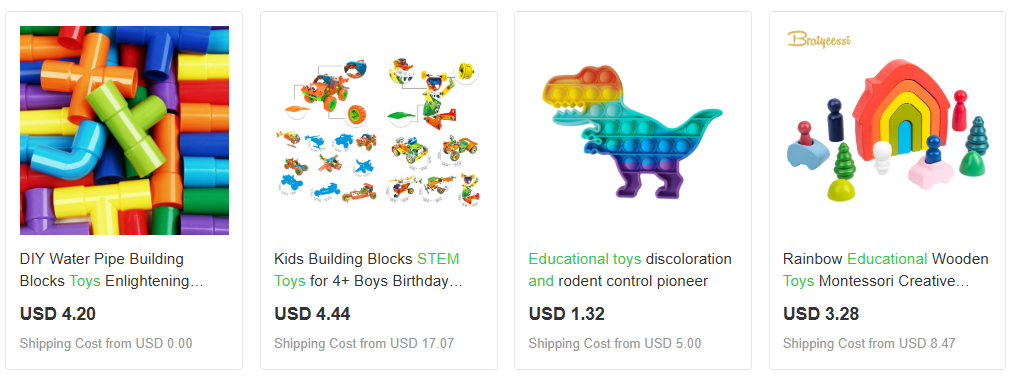
Choose kits with clear instructions in the customer's language, easy-to-follow steps, and a way to replace fragile parts. You can make an offer more useful with age-based bundles, storage boxes, printable activity guides, or demonstrations for parents. Avoid exaggerated claims about learning outcomes.
Montessori-Inspired and Wooden Toys
Montessori-inspired and wooden toys can suit stores with a natural, simple visual style. Examples include wooden puzzles, stacking rings, sorting boxes, peg boards, shape sorters, balance games, and lacing toys. Product pages should clearly state the materials, dimensions, finish, and suitable age range. Do not suggest that a product is officially Montessori-approved unless you have documentation to support that claim.
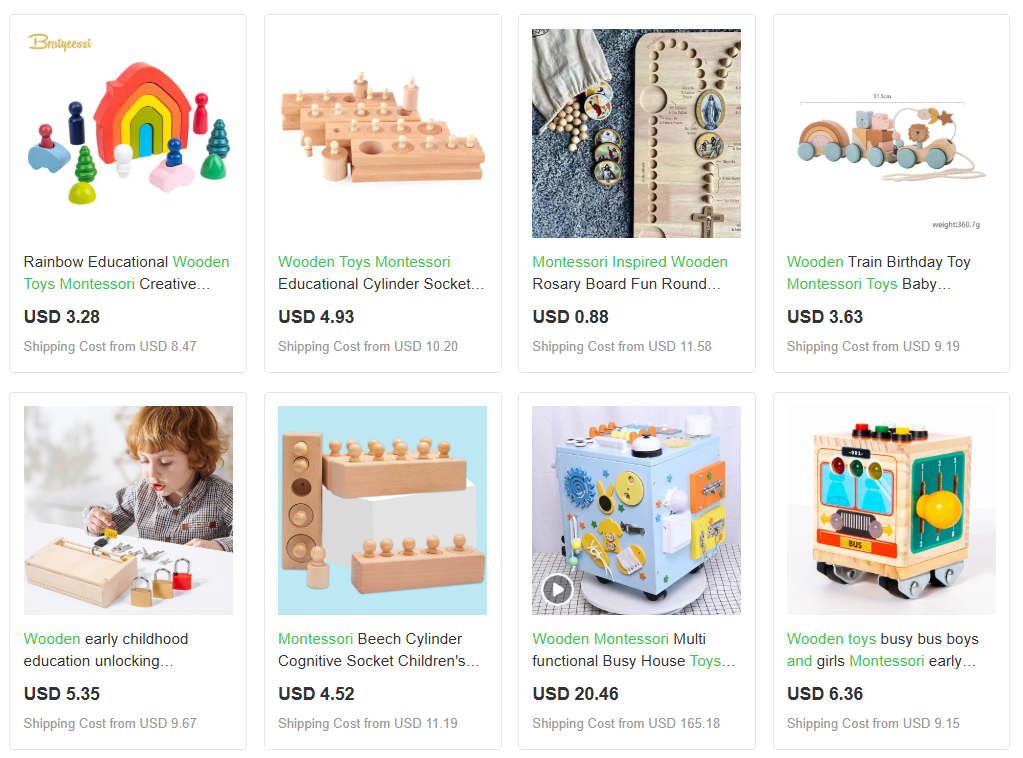
Before promoting wooden toys widely, check the finish, paint, joints, smell, edges, and packaging. Wooden products may feel durable, but their weight can increase shipping costs, and poor packaging can lead to damage. Compare the packed weight and box size, check corner protection, and review the supplier's replacement policy.
Plush Toys and Dolls
Plush toys and dolls may appeal to shoppers buying gifts or collecting items with related themes. Problems can arise when product size is unclear, stitching is poor, or images copy protected characters. Include exact measurements, photos that show scale, care instructions, and accurate color descriptions. For plush toys intended for young children, check seams, detachable parts, stuffing, and any required choking warnings.
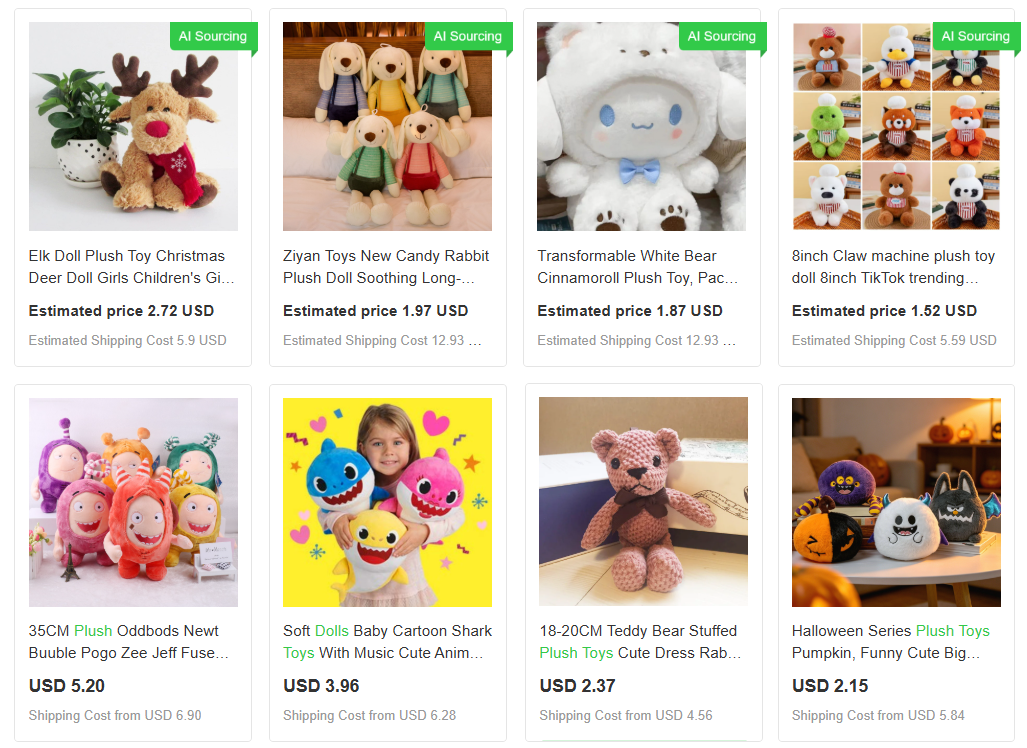
Related products include doll accessories, plush outfits, mini blankets, pretend feeding sets, carrying bags, storage baskets, and gift packaging. Use generic designs unless you can verify the licensing. Make clear whether small accessories are suitable for children or intended for older users and collectors.
Puzzles, Board Games, and Building Blocks
Puzzles, board games, and building blocks have clear uses that are easy to explain. Examples include jigsaw puzzles, family card games, matching games, construction sets, magnetic blocks, and interlocking block kits. Missing pieces, confusing instructions, language issues, or similarities to protected designs can lead to complaints and returns.
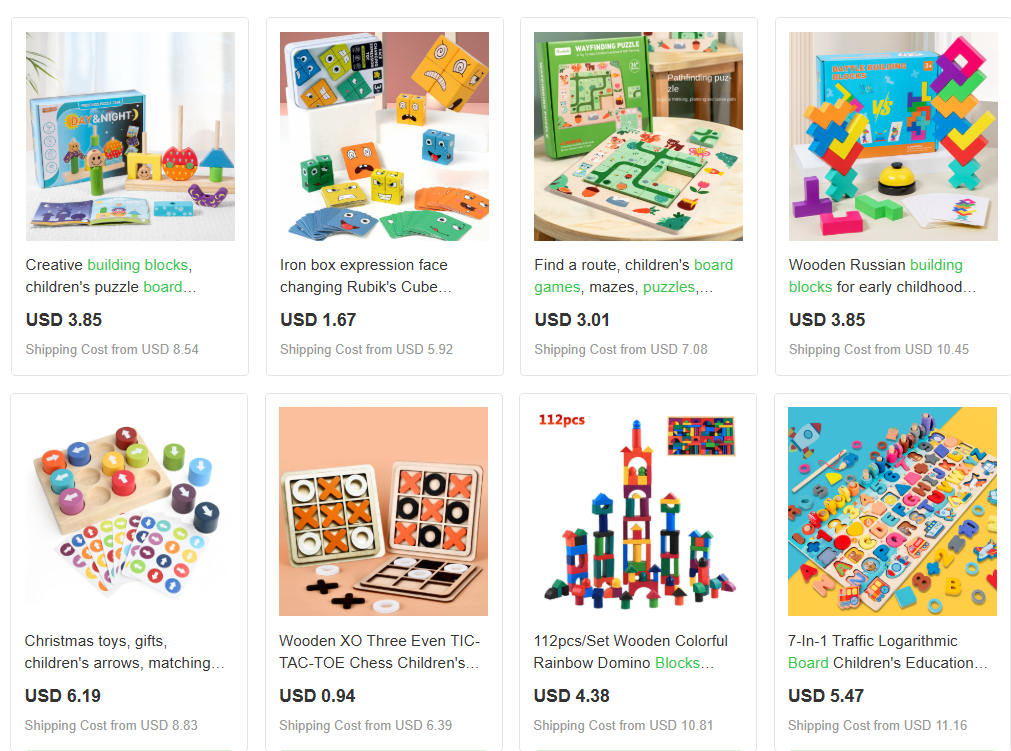
Choose products with clear photos of every piece, sturdy packaging, and a straightforward replacement policy. Match the difficulty to the intended age group: a 24-piece puzzle and a 500-piece puzzle are designed for different users. Include package dimensions, as board games and building sets may take up more shipping space than their weight suggests.
Arts, Crafts, and Creative Toys
Arts and crafts products are easy to demonstrate in photos and videos: show the finished project, the steps, or how the kit can be used as a gift. Examples include drawing toys, reusable writing tablets, sticker kits, bead sets, clay kits, washable markers, and DIY ornament kits. Describe materials accurately. Depending on the market and age group, paints, clay, glue, markers, powders, and beads may have specific labeling or testing requirements.
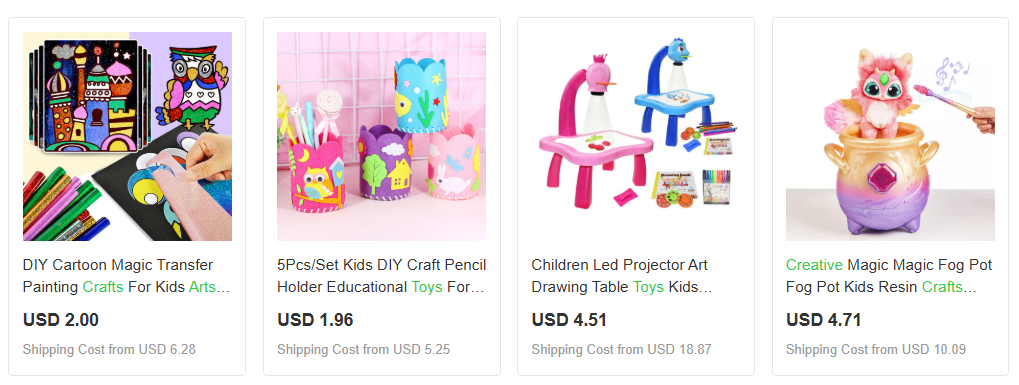
For this category, look for complete kits, neat packaging, clear instructions, and an accurate description of how messy the activity may be. Check whether replacement parts or refills—such as pens, batteries, paper rolls, and beads—are available. These items may encourage repeat orders, but unclear refill details can also lead to customer questions.
Pretend-Play and Role-Play Toys
Pretend-play toys include play kitchens, doctor kits, tool benches, shopping sets, costumes, miniature household items, and classroom sets. Make the theme and package contents clear. Show every included item and point out any props in the photos that are not part of the set.
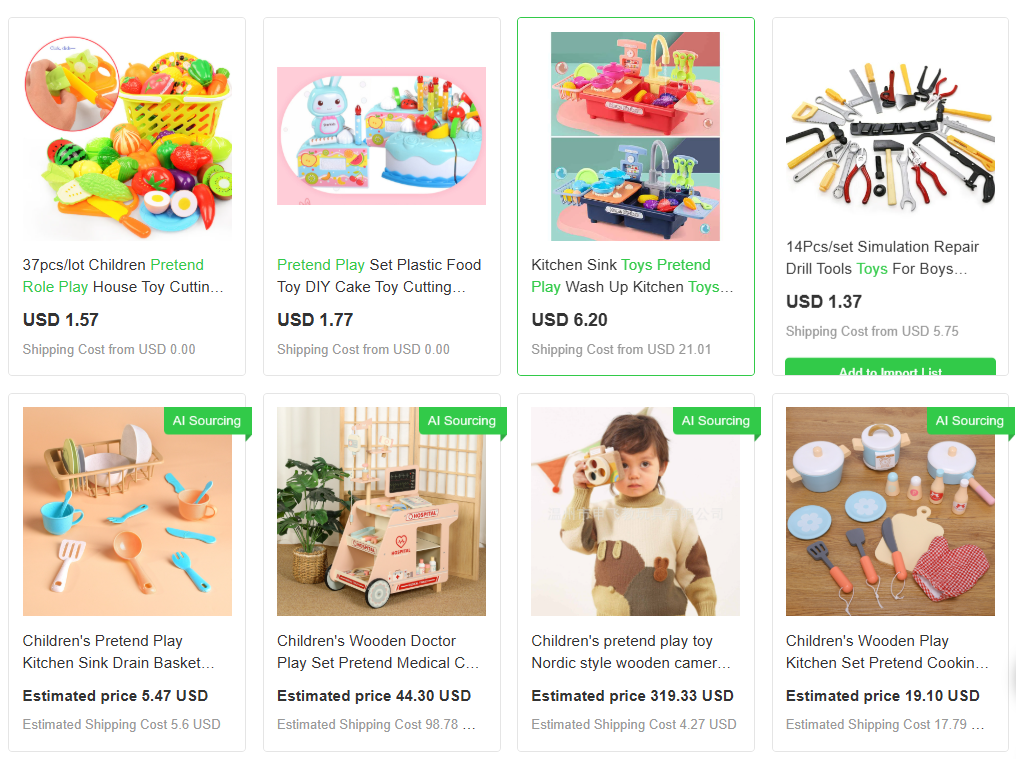
Check the set's dimensions and age guidance, along with sharp edges, loose accessories, magnets, button batteries, and small parts. Sets with many pieces or large boxes may cost more to ship, so review packaging strength and how missing parts are handled. For costumes, check fabric quality, applicable flammability requirements, sizing, and whether the item is classified as a toy, clothing, or both.
Fidget and Sensory Toys
Fidget and sensory toys can be bundled and may appeal to shoppers making small, unplanned purchases. Keep product claims factual. Do not say a toy treats anxiety, ADHD, autism, or another medical condition without suitable evidence and an understanding of the related regulatory requirements. Focus instead on features such as texture, color, portability, desk use, party favors, and gifting.
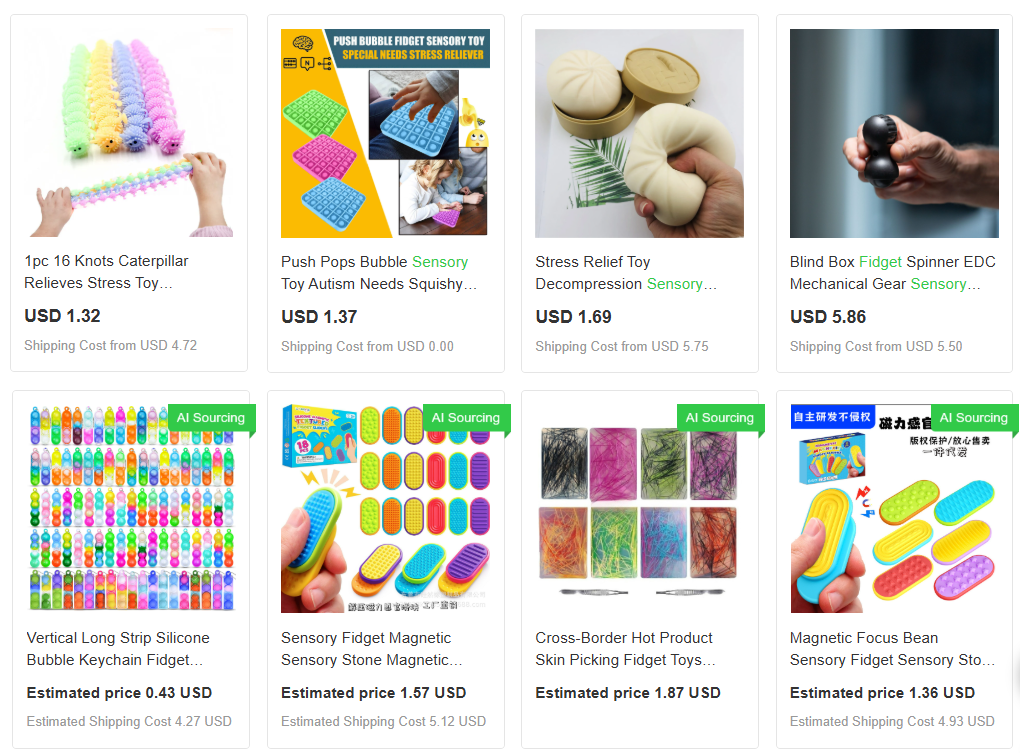
Check material quality and age suitability. Some low-cost fidget toys may tear, leak, break, or release small pieces. Confirm whether the item is made of silicone, plastic, foam, gel-filled material, or metal, and check that its size and detachable parts are appropriate for the stated age range and intended use.
Toy Cars, Action Figures, and Collectible Toys
Toy cars, action figures, and collectibles can be grouped into themed pages and related product series, which may encourage repeat purchases. Competition can be strong, and unauthorized branding is a key concern. Avoid products that copy well-known characters, logos, vehicles, or entertainment franchises unless the supplier can provide proof of licensing.
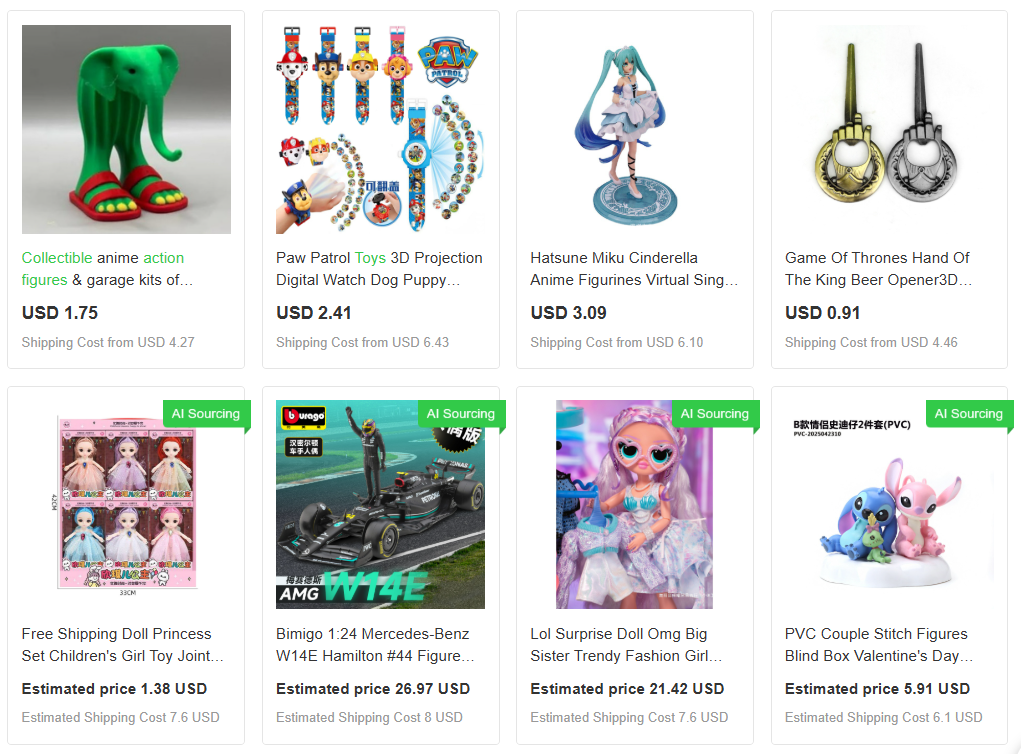
For generic collectibles, state the dimensions and materials so buyers know whether the item is a toy, model, desk ornament, or display piece. Related products such as plain storage cases, display shelves, play mats, and organizer boxes may be considered as add-ons when they do not use protected names or logos.
Outdoor, Water, and Electronic Toys
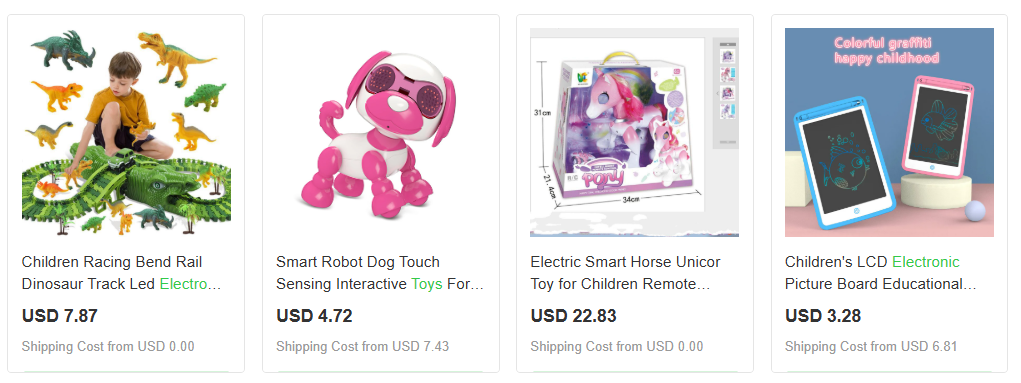
Outdoor, water, and electronic toys may have higher price points, but they also require checks for shipping costs, seasonality, batteries, and safety. Examples include bubble machines, splash pads, sprinkler toys, foam launchers, walkie-talkie-style toys, LED drawing boards, remote-control cars, and sound-and-light play sets. Water toys should include clear warnings and realistic instructions for use.
Electronic toys may need checks for battery compartments, chargers, sound levels, lights, and durability. Confirm whether batteries are included, which type they use, and whether the supplier has relevant electrical safety documents. Check carrier rules for lithium batteries and liquids. Size and season also matter: a large water toy may be expensive to ship and attract less interest in colder months. Start with a short list, order samples when possible, and review returns and customer feedback before expanding.
How to Choose the Right Toys to Dropship
Choosing toys means comparing each product against a few practical requirements. Even a popular item may not suit your store if it is difficult to explain, expensive or risky to ship, easy to copy, or unclear from a compliance perspective. Use the same checklist before adding products to your store.
Match Products to a Specific Target Audience
A general toy store can be difficult to position. Identify both the person using the toy and the person buying it, such as a parent, relative, teacher, or collector. The user affects age guidance, supervision, piece size, and how the toy will be used. The buyer is more likely to focus on price, occasion, delivery, and trust. You could focus on gifts for preschoolers, screen-free family games, birthday craft kits, desk collectibles, or outdoor summer toys.
A clear audience helps you plan product pages, ads, bundles, email campaigns, and customer support. It also makes it easier to skip trending products that do not fit your store. A $12 party favor, a $35 birthday gift, and an $80 outdoor set each need different photos, product details, delivery expectations, and risk checks.
Evaluate Demand and Competition
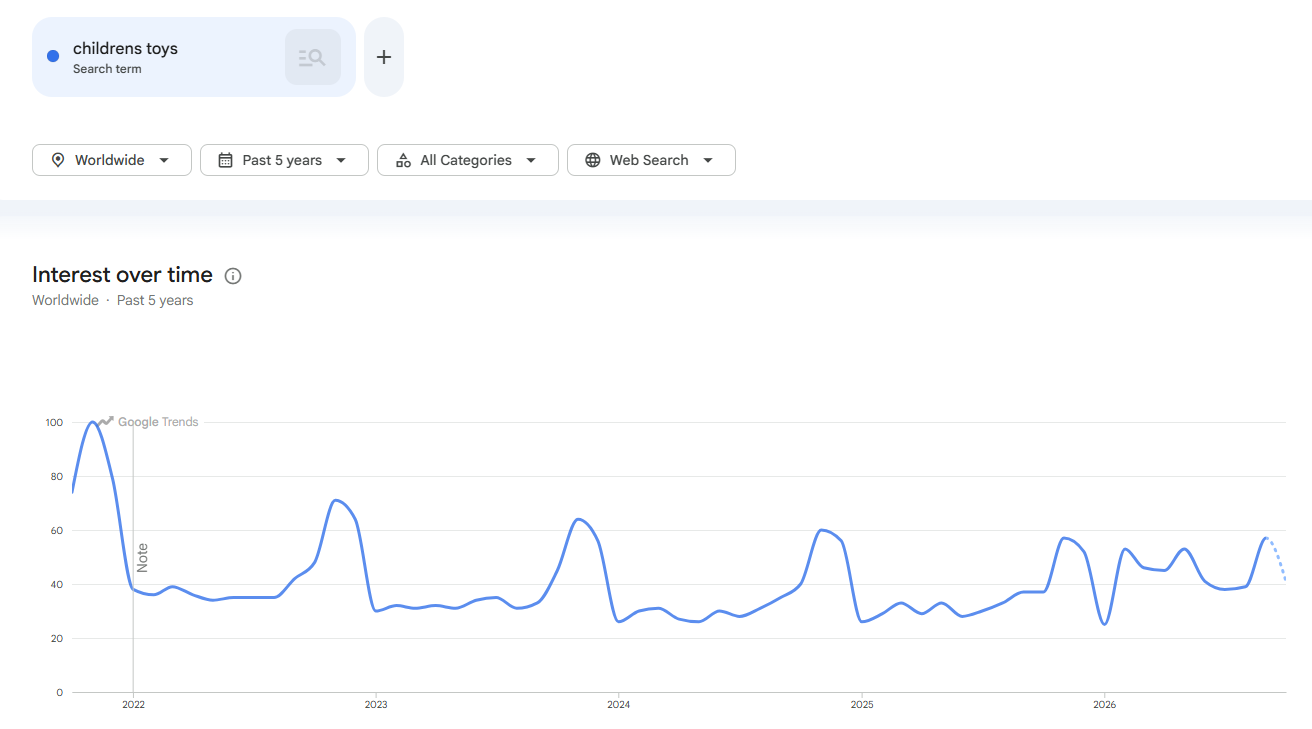
Use several sources to assess demand. Google Trends shows relative search interest, not actual sales. Marketplace results help you judge competition, while reviews can reveal common customer concerns. Separate seasonal products, such as water toys, from items that may sell year-round, such as puzzles and plush gifts. Search activity and social media attention can indicate interest, but they do not prove that a product will sell.
Compare competitors' prices, delivery promises, photos, and customer complaints. A product may have many search results but poor reviews, or plenty of social videos but little margin after shipping. Keyword tools may show phrases such as “childrens toys”. Use these as clues about what people search for, but write your product pages in natural language.
Compare Product Costs and Selling Prices
When calculating margins for toy dropshipping, consider the full cost of delivering the order, as shown in the example above. Use the packed weight and dimensions to estimate shipping and fulfillment charges. Add product cost, payment processing, variable app or platform fees, advertising, and expected losses from returns or replacements. Include customer-service labor where relevant, and avoid counting any cost twice. Then compare the total with realistic selling prices.
No single markup works for every toy. A small plush toy, a bulky pretend-play set, and an electronic water toy have different shipping and return costs. If an item needs frequent discounts to stay competitive, consider whether it makes more sense as part of a bundle, an add-on, a seasonal promotion, or an offer to your email subscribers.
Check Product Quality, Shipping, and Return Risks
Quality problems are not limited to broken items. Customers may return toys because the color differs from the photos, the item is smaller than expected, the packaging is unsuitable for gifting, instructions are unclear, pieces or batteries are missing, or delivery arrives after a birthday. Ask suppliers for actual packaging photos, a list of included parts, dimensions, and shipping options.
If possible, order a sample and compare it with the listing. Check the materials, dimensions, colors, included parts, battery details, instructions, and warnings. Look for defects, unusual odors, weak seams, sharp edges, loose parts, damaged packaging, and delivery delays before increasing promotion.
Use a Practical Toy Product Evaluation Checklist
- Audience: define the child end user, gift purchaser, age range, use case, and price point.
- Demand: compare search interest, marketplace results, reviews, seasonality, and social signals without treating them as guaranteed sales.
- Competition: review competing prices, images, shipping promises, bundles, complaints, and differentiation gaps.
- Costs: calculate product cost, shipping, fulfillment, ads, platform fees, returns, and contribution before fixed overhead.
- Shipping: confirm packed weight, dimensions, carrier restrictions, delivery time, tracking, and packaging resilience.
- Quality/docs: inspect samples, materials, defects, batteries, pieces, instructions, warnings, tests, declarations, and age labels.
- IP claims: avoid protected characters, logos, brand names, designs, and unauthorized “inspired by” claims.
Toy Safety and Compliance: What You Should Check
Toy safety should be checked before a product is listed, not treated as a badge to add later. Understand the rules in your target market, your responsibilities as a seller, the toy's age range, required warnings, and which documents the supplier can provide. Requirements vary by location, and marketplaces may have rules in addition to the law.
Before writing a product page, identify the type of toy and how it will be used. Is it intended for children or adults? Does it contain small parts, use batteries or electricity, include craft materials, or come into contact with food or water? Is it marketed with learning, sensory, or health-related claims? These details help you decide what to ask the supplier and whether the product belongs on your shortlist.
Understand Requirements in Your Target Market
For the United States, the U.S. Consumer Product Safety Commission explains that ASTM F963 is mandatory for children's toys through 16 C.F.R. part 1250 and that a toy is an object designed, manufactured, or marketed as a plaything for children under 14. For children's products primarily intended for children 12 or younger, applicable rules generally require CPSC-accepted third-party testing and a Children's Product Certificate issued by the domestic manufacturer or importer. This does not mean every possible provision is tested for every product; the applicable requirements depend on the exact toy, age grade, materials, features, and market role (CPSC Toy Safety Business Guidance).
For the European Union, the European Commission states that the Toy Safety Directive 2009/48/EC sets safety criteria for toys marketed in the EU and that toys sold in the EU must carry CE marking. Sellers should review the EC declaration of conformity, technical documentation, and required warnings or instructions in the appropriate language. CE marking is not a certificate from the EU; it is the manufacturer's declaration that the toy satisfies applicable essential safety requirements. The Commission also states that Regulation (EU) 2025/2509 entered into force on 1 January 2026 and will generally start applying on 1 August 2030 after transition, so sellers should not describe digital product passports as a universal current requirement for all toy sales today (European Commission Toy Safety).
Review Product Documentation and Age Labels
Ask for documents that match the exact model, not just a similar product. Depending on the item and market, you may need model details, material information, test reports, declarations, warnings, instructions, age grading, traceability details, manufacturer or importer information, and batch or lot numbers. Relevant documents may include a Children's Product Certificate (CPC), an EC declaration of conformity, technical documentation, or supplier declarations.
The documents required depend on the product, your role as seller, the destination market, the manufacturing date, and the intended age range. A general assurance from a supplier may not be enough if it does not cover the exact SKU and market. Do not say that every toy is certified unless you have evidence for each product.
Identify Products That Need Extra Due Diligence
Review products carefully if they contain magnets, button batteries, projectiles, liquids, powders, cosmetic-like materials, cords, inflatable parts, lights, chargers, or many small accessories, or if they are designed for water use. This is not a complete list. Toys for babies and toddlers also need particular care. If the supplier cannot provide adequate documentation, consider another product. Careful product selection can help protect customers and manage business and account risks.
How to Start Dropshipping Toys
Starting a toy store is not just about listing a large number of products. Begin with a focused selection and check whether it suits your audience. EPROLO describes its platform as supporting product sourcing, inventory, fulfillment, shipping, and branding services. These services may support your workflow, but you should still check each product's documents, images, costs, and fit for your target market.
1. Choose a Toy Niche and Target Audience
Choose a niche that gives you useful topics to cover over time. Examples include gifts for young learners, party craft kits, screen-free family games, desk collectibles for teens and adults, or outdoor summer toys. Define the intended user, gift occasion, budget, shipping destination, and the questions your product pages need to answer. This makes it easier to compare products.
2. Shortlist and Evaluate Products
Make a shortlist before adding products to your store. Compare supplier photos and descriptions, available documents, reviews, packaging, shipping estimates, and refund history when available. Remove items with unclear age labels, vague material details, or possible intellectual-property issues. If two products are similar, clearer documentation and better packaging may matter more than the lowest item price.
3. Set Up Your Online Store and Product Pages
Choose an ecommerce platform that supports product variants, shipping settings, return policies, tracking emails, and detailed product pages. Answer common questions before checkout. Include dimensions, package contents, materials, age guidance, relevant warnings, delivery estimates, return terms, and accurate photos. Show the toy's size clearly. Comparison images, short demos, and gift ideas can also help, but avoid medical or developmental claims and promises of specific learning results unless you have strong evidence.
4. Test Products Before Expanding Your Catalog
Start with a small group of products and track the whole buying process: product-page visits, add-to-cart activity, conversion rate, completed checkouts, contribution per order, customer questions, fulfillment time, tracking updates, delivery condition, feedback, and return reasons. Use these results to decide which products to keep, improve, or remove. An item that attracts clicks but causes many support issues may not be suitable to expand. Add more products when both the results and customer experience support the decision.
Frequently Asked Questions
What Are the Best Toys to Dropship?
When evaluating toys to dropship, look for signs of demand, manageable shipping, clear photos, age-appropriate labeling, and supplier documentation that matches the target market. STEM kits, craft sets, plush toys, puzzles, pretend-play sets, fidget toys, collectibles, and outdoor toys are possible options, depending on the product and market.
How Do You Find Trending Toys to Dropship?
Use search trends, marketplace review patterns, social video ideas, competitor ads, gift guides, and supplier catalogs together. A trend is worth investigating when there are signs of buyer interest, product details are clear, landed costs are manageable, and compliance requirements are understood. Avoid copying every viral item without checking quality and documentation.
Can You Dropship Toys Without Holding Inventory?
Dropshipping lets you sell toys without storing them yourself. A supplier or fulfillment partner stores and ships the products. You are still responsible for choosing suitable items, giving customers accurate information, handling support, and checking whether each product can be sold in your target market.
What Should You Check Before Selling Toys Online?
Check age range, warnings, materials, small parts, magnets, batteries, dimensions, packaging, shipping time, supplier reliability, product photos, return risk, marketplace policies, and safety documentation. Also review whether the product resembles protected characters, brands, or designs that could create intellectual-property complaints.
Do Dropshipped Toys Need Safety Certificates?
Some toys need specific testing, conformity documentation, labels, or warnings depending on product type, age range, seller role, and destination market. In the United States, children's products primarily intended for children 12 or younger generally require CPSC-accepted third-party testing and a Children's Product Certificate when subject to applicable CPSC rules. Always check official requirements for the market you sell into.
Conclusion
Toy dropshipping in 2026 requires careful demand research, realistic cost calculations, and attention to product safety. Start with a clear target audience, review each SKU, avoid claims you cannot support, and test a small selection before expanding. Check product documents during sourcing rather than leaving them until later. EPROLO offers sourcing and fulfillment support, but product-level compliance checks should remain part of your launch process.
Related Reading
- Top Dropshipping Products in 2026: A Guide to Product Research
- How to Make Money with Dropshipping: A Step-by-Step Guide
- Dropshipping Side Hustle: Key Things to Know
- Electronics Dropshipping Suppliers & Products to Sell
- 20+ Best Thanksgiving Dropshipping Products to Sell in 2026
Written by: Inverse
Inverse works in Google SEO, with a focus on technical site audits, content clustering, and keyword strategy. The work includes practical recommendations for improving search visibility and organic traffic across ecommerce websites.