Many people researching online business models ask what a dropshipping side hustle is and why it appeals to beginners. In short, dropshipping is a retail fulfillment method in which you sell products online without holding inventory yourself.
Because it removes the need to manage a warehouse, dropshipping attracts those looking to build a business alongside a full-time job or studies. However, treating it as a legitimate venture means acknowledging that it still requires dedicated time, marketing skills, customer service, and careful supplier management. This guide will help you evaluate the feasibility, pros and cons, startup costs, time commitments, and exact steps needed to get started.
Key Takeaways
- Dropshipping offers a low upfront inventory commitment and remote flexibility, making it a viable side hustle for beginners.
- Success requires structured time management, realistic budgeting, and taking full responsibility for customer service despite relying on suppliers.
- Startup costs are inevitable and generally cover your store platform, domain, product samples, and marketing tests.
- Following a step-by-step process—from selecting a niche and validating demand to monitoring fulfillment—builds a sustainable foundation.
- Branded dropshipping should be considered only after you have validated product demand and assessed associated costs.
Table of Contents
- Is Dropshipping a Good Side Hustle?
- The Pros and Cons of Dropshipping as a Side Hustle
- How Much Does It Cost to Start a Dropshipping Side Hustle?
- How Much Time Does a Dropshipping Side Hustle Require?
- Starting a Dropshipping Side Hustle: A Step-by-Step Guide
- Expand Your Dropshipping Side Hustle with Branded Dropshipping
- Conclusion
Is Dropshipping a Good Side Hustle?
Dropshipping can be a viable supplementary business for some people, but actual results depend entirely on product demand, customer acquisition, supplier reliability, available time, and cost management.
It is possible for those willing to learn e-commerce fundamentals and consistently manage a store outside their main commitments. It appeals to beginners largely because there is no need to purchase and store inventory upfront in the traditional way.
However, beginners often underestimate the operational workload. You must handle marketing, product research, customer service, returns, and supplier coordination. It is vital to understand that a low inventory investment does not mean low overall business risk.
The Pros and Cons of Dropshipping as a Side Hustle
Understanding the benefits and drawbacks of dropshipping helps to gain control and set the proper expectations. This analysis allows you to consistently advance on the chosen strategy of success. Below are the pros and cons of doing dropshipping side business.
Pros
- Lower upfront inventory commitment: Test product ideas without purchasing large quantities of stock upfront.
- No physical warehousing: Sell products without managing your own warehouse or personally packing every order.
- Remote flexibility: Operate your business remotely with an internet connection.
- Easy product testing: Evaluate different products without committing to bulk inventory purchases.
Cons
- High competition: Compete with sellers offering similar or identical products.
- Supplier dependence: Rely on suppliers for product quality, inventory accuracy, and shipping performance.
- Tighter profit margins: Marketing and customer acquisition costs can reduce net margins.
- Customer service responsibility: Handle customer communication, refunds, and order issues even when suppliers fulfill orders.
Considering both the advantages and drawbacks of dropshipping, you can decide whether dropshipping side hustle is for you. Remember, success requires dedication and strategic planning. It also demands a willingness to adapt to overcome the inherent challenges of this business model.
How Much Does It Cost to Start a Dropshipping Side Hustle?
Startup costs vary depending on the store platform, product testing, marketing strategy, and tools selected. There is no single cost that applies to every beginner.
Learn more: How Much Does It Cost to Create a Dropshipping Business
To give you a realistic view of the expenses you need to budget for before launching, here is an illustrative scenario of potential startup costs:
| Expense Category | Typical Cost or Range | One-Time or Recurring | Notes |
|---|---|---|---|
| Store Platform | ~$39 / month | Recurring | Based on the Basic Shopify plan (US pricing). |
| Custom Domain | $10 - $20 / year | Recurring | Varies by domain registrar (e.g., .com vs. .store). |
| Product Samples | $50 - $100+ | One-Time | Essential for testing product quality before selling. Varies by retail price. |
| Marketing & Ads | Variable | Recurring | Initial budgets to test customer acquisition and validate demand. |
| Operating Apps | $0 - $30 / month | Recurring | Paid tools for email marketing, review integration, or store optimization. |
| Payment Processing | Stripe: approximately 2.9% + $0.30; PayPal: approximately 3.49% + $0.49 |
Per Transaction | Illustrative US domestic transaction rates. Verify current rates and applicable conditions on official provider pages. |
Furthermore, sales revenue is not the same as profit. Sellers must account for product costs, shipping, marketing, platform fees, payment fees, refunds, and other applicable expenses. Working capital is also required to cover timing gaps between customer payments and supplier charges. If relevant to your workflow, using supplier and fulfillment services like EPROLO may reduce the need to manage inventory manually, but it does not eliminate these foundational startup costs.
How Much Time Does a Dropshipping Side Hustle Require?
Time requirements depend heavily on the stage of the business, order volume, marketing workload, customer inquiries, and the level of automation.
Learn more: How Much Time Does a Dropshipping Business Really Require to Run Successfully?
Managing a store alongside existing responsibilities requires understanding how your workload is divided into two distinct stages:
Stage 1: Setup and Testing
| Typical Task | Estimated Time Commitment |
|---|---|
| Niche, Product Research & Store Setup | 15 - 20+ hours |
| Supplier Evaluation & Sample Testing | 3 - 5 hours |
Stage 2: Ongoing Operations
| Typical Task | Estimated Time Commitment |
|---|---|
| Marketing Performance Monitoring | 4 - 6 hours / week |
| Customer Service & Returns | 3 - 5 hours / week |
| Order & Tracking Issue Monitoring | 2 - 3 hours / week |
Automation changes how you spend your time. Product importing, order synchronization, and fulfillment workflows can reduce repetitive manual work when supported by your chosen platform and supplier. However, automation does not eliminate the need to manage marketing, handle customer exceptions, or make strategic business decisions.
Starting a Dropshipping Side Hustle: A Step-by-Step Guide
1. Choose a Niche and Target Audience
Select a niche based on clear customer needs, demand, competition, and product characteristics. Focusing on an area where you have some personal knowledge or interest can make marketing much more authentic.
2. Research Products and Validate Demand
Assess market demand and compare competing offers. Estimate your potential margins to ensure the product is financially viable. Avoid choosing products solely because they are temporarily trending without verifying long-term demand.
3. Evaluate Suppliers and Test Product Quality
Check supplier reliability, product consistency, shipping options, tracking, return arrangements, and communication. Consider ordering samples before committing significant marketing spend. You can explore EPROLO as one option for product sourcing and dropshipping fulfillment.
4. Build Your Store and Set Clear Policies
Ensure your website features accurate product descriptions, realistic delivery estimates, transparent shipping and return policies, and a clear customer support process. Transparency builds trust.
5. Test Marketing Channels and Product Demand
Select suitable marketing channels and start with a manageable test budget. Monitor relevant metrics (like click-through rates and conversion costs) and adjust campaigns based on hard evidence rather than assumptions.
6. Monitor Fulfillment and Improve Operations
Consistently monitor order statuses, tracking updates, delivery issues, customer feedback, refunds, and product performance. Where supported, EPROLO's order synchronization and fulfillment workflows can reduce manual data entry tasks, but sellers remain fully responsible for overseeing the customer experience and resolving issues.
Expand Your Dropshipping Side Hustle with Branded Dropshipping
What Is Branded Dropshipping?
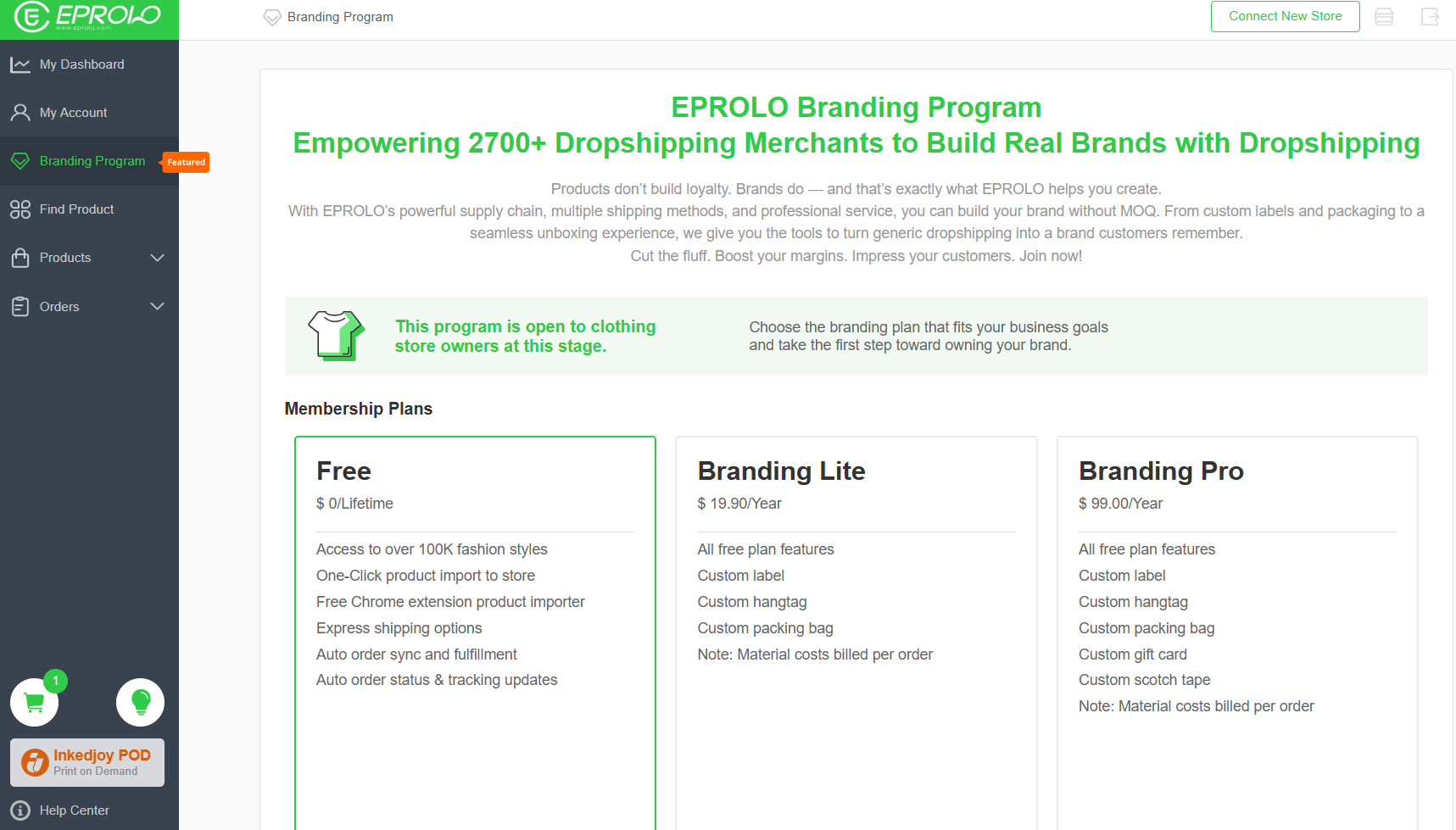
Branded dropshipping involves using customized packaging, labels, or other supported branding elements to help a seller build a more recognizable customer experience, stepping away from generic unbranded packages.
When Should You Consider Branded Dropshipping?
Sellers can consider branding once they understand their target audience, have evidence of product demand, and can assess the associated costs. The right timing depends on the business model, budget, and operational resources. Branding can help differentiate a store, but it does not automatically lead to higher profit margins or stronger customer loyalty.
Learn more: How to Build a Branded Dropshipping Store Without Holding Inventory in 2026
Explore EPROLO's Branding Options
If you reach the stage where branding makes sense, you can introduce relevant EPROLO branding services. Depending on availability and eligibility, options such as custom hangtags or packaging may help create a more recognizable brand experience.
Conclusion
The world of dropshipping side hustle offers a compelling opportunity to test the waters of ecommerce. For aspiring entrepreneurs, this turns their business ideas into reality. But is dropshipping a good side hustle for you? The answer to this question depends on your goals and resources. While dropshipping offers a low-barrier entry point, success requires time, planning, and a commitment to continuous learning.
Take the time to carefully assess your available time and budget, test product demand methodically, and improve your operations as you learn. If you are ready to begin and need support with product sourcing and fulfillment, you can explore EPROLO's dropshipping services to help streamline your new venture. Transform your dropshipping dreams into a successful dropshipping side business. Start today and watch your business blossom!
Read More from EPROLO Blog
Written by: Carry
With over 10 years of e-commerce experience, Carry specializes in dropshipping, website management, and marketing strategies. She provides actionable insights that help online sellers grow, optimize their stores, and succeed in a competitive marketplace.