The best Q4 dropshipping products combine gift appeal, healthy landed margins, reliable stock, and delivery speeds customers can trust. In 2026, merchants should prepare before October, build campaigns around Halloween, BFCM, Christmas, and New Year, then shift late-season orders toward locally stocked products when cross-border delivery becomes too risky.
Key Takeaways
- Source and sample products before October instead of waiting for peak ad auctions.
- Build separate offers for visual impulse buying, gifting, winter comfort, travel, pets, and New Year routines.
- Model a 3x to 4x retail-price target, but approve products only after calculating landed cost, ad spend, returns, and fees.
- Publish delivery deadlines clearly and stop promising Christmas arrival when the chosen route cannot support it.
- Use automation, pre-delivery checks, local inventory, and branded packaging to protect the customer experience.
Inside This Article
Why Holiday Dropshipping Dominates Q4 E-Commerce
Q4 concentrates several powerful buying motives into one calendar. Shoppers decorate homes, attend parties, travel, replace cold-weather essentials, buy gifts for relatives and coworkers, and spend on pets. The National Retail Federation’s holiday benchmark forecast of over $1 trillion in U.S. holiday retail sales provides a clear baseline for growth. Merchants preparing their Q4 2026 dropshipping campaigns should focus on early-bird shoppers and mobile checkout optimization to capture this seasonal demand.
That extended buying season rewards preparation. Merchants who identify products early can order samples, improve product pages, create original videos, confirm stock depth, and negotiate processing expectations before demand surges. Merchants who wait until late November face expensive traffic, weaker supplier availability, and less time to correct a poor product or slow route.
Holiday demand does not make every product profitable. Revenue scales only when the offer leaves enough room for higher advertising costs, expedited shipping, refunds, customer support, and replacement orders. Treat Q4 as an operational campaign, not a lottery based on one viral item.
Key Q4 Holiday Nodes from Halloween to New Year
A useful Q4 roadmap starts before the quarter. Assign every campaign a sourcing date, sample deadline, creative-production window, launch date, scaling rule, and shipping cutoff. Search intent changes at each node, so one generic holiday campaign rarely performs as well as a sequence of focused offers.
| Sales node | Preparation window | Primary intent | Operator action |
|---|---|---|---|
| Halloween, October | Source in July or August; launch testing by early September. | Visual impulse products, costumes, decor, party accessories. | Lead with short videos, bundles, countdowns, and clear event-delivery dates. |
| Black Friday and Cyber Monday, November | Lock suppliers and creatives by October; warm audiences before deal week. | Discount comparison, bundles, higher-value gifts, practical upgrades. | Use offer ladders, cart-value thresholds, retargeting, and stock alerts. |
| Christmas, December | Build gift campaigns in October; scale after BFCM with route-specific cutoffs. | Family gifts, home atmosphere, personalized presentation, urgent delivery. | Separate giftable cross-border items from locally stocked late-season products. |
| New Year, late December to January | Prepare creative during November; launch after final Christmas-order push. | Organization, fitness, travel, routines, home refresh, self-improvement. | Replace gift language with fresh-start benefits and practical use cases. |
For Christmas, do not advertise one universal international deadline. A conservative planning rule for many standard cross-border routes is to stop promising Christmas delivery around December 10 to 12, but the correct date depends on origin, destination, processing time, customs, and carrier service. Published 2025 international mailing guidance placed several economy deadlines in early December. Add a buffer, verify each route, and show customers the date at checkout.
After the safe cross-border window closes, switch eligible campaigns to products already stocked near customers. Keep selling cross-border products only when the product page clearly says arrival may be after Christmas. Transparent timing protects trust better than an aggressive promise the carrier cannot meet.
Top Trending Q4 Dropshipping Products by Holiday Category
The following holiday dropshipping products are practical starting points for testing. They are not guaranteed winners. Validate each item with samples, audience research, current ad data, supplier stock, shipping cost, and return risk before scaling.
Holiday Decor & Accessories
Test compact products that transform a room quickly on camera: LED string lights, window projectors, reusable table runners, miniature village accessories, wreath storage bags, ornament organizers, themed cushion covers, and party photo props. These items suit before-and-after videos and multi-item bundles. Avoid fragile glass, oversized wreaths, and electronics with unclear plug, battery, or safety documentation.
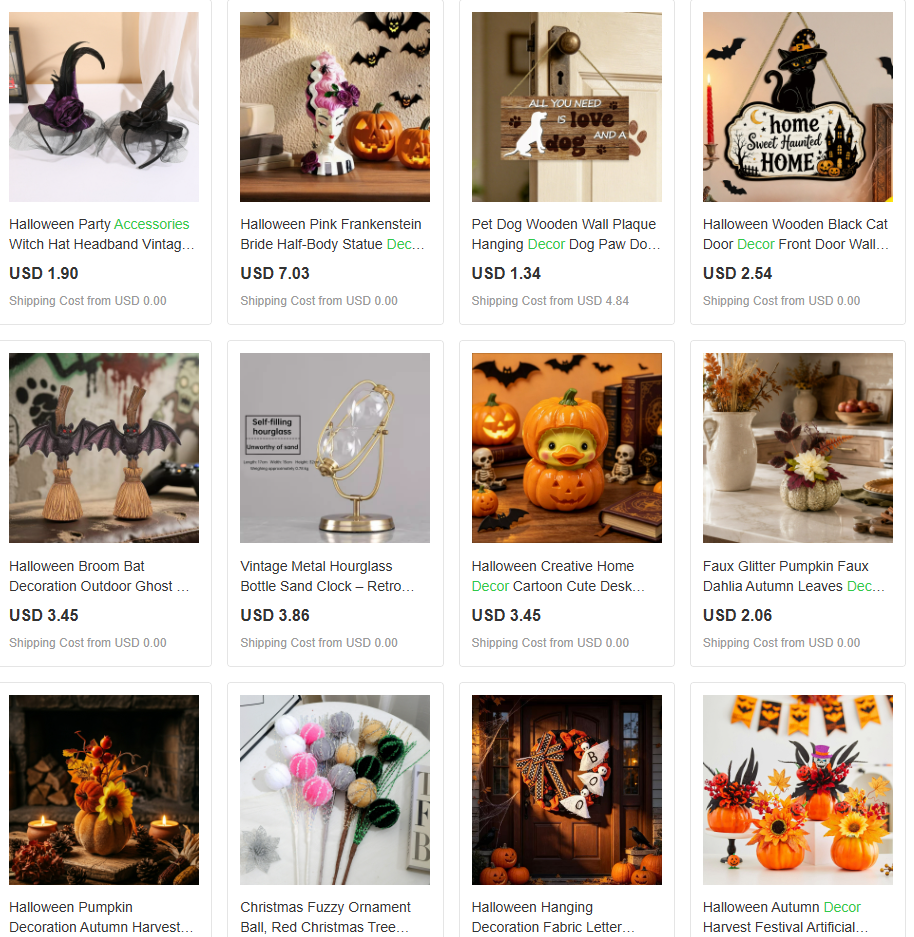
Decor performs best when the merchandising is specific. Build a “small apartment Christmas,” “cozy neutral holiday,” or “last-minute party setup” collection rather than mixing unrelated styles. Include dimensions in images so customers understand scale.
Christmas Gifts
Giftable products should communicate value without requiring a long explanation. Consider jewelry organizers, rechargeable hand warmers, compact massage tools, personalized-style keepsake boxes, desk accessories, hobby kits, insulated drinkware, book lights, and travel jewelry cases. A good gift product has a recognizable recipient, such as “for a remote worker,” “for a frequent traveler,” or “for a new pet owner.”
Create gift bundles by use case rather than discount alone. A desk reset kit can combine a cable organizer, compact lamp, and cleaning brush. Verify battery rules, materials, package contents, and any age-related warnings before advertising.
Cold-Weather Apparel
Cold-weather demand supports fleece-lined leggings, thermal socks, knit beanies, touch-screen gloves, blanket scarves, quilted vests, indoor slippers, and layered lounge sets. Apparel can support strong gift presentation, but sizing inconsistency creates returns. Publish garment measurements, fit notes, fabric composition, care instructions, and model references.
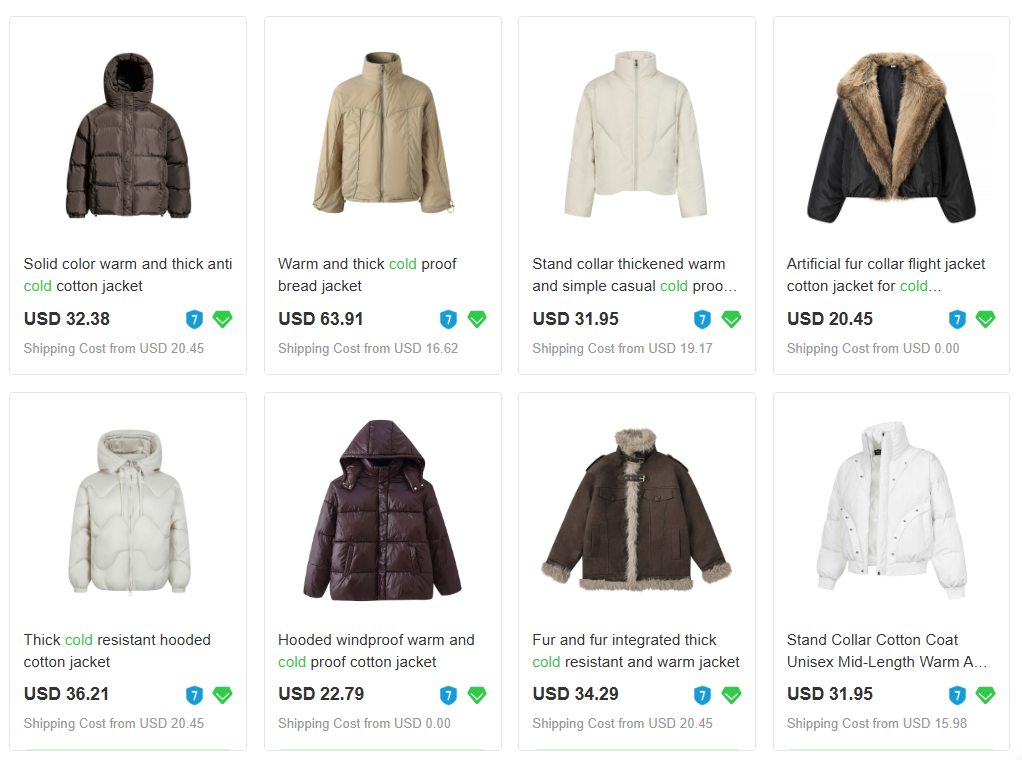
Order samples in multiple sizes and colors. Confirm color consistency, stitching, stretch, fabric weight, and packaging. For branded fashion, EPROLO’s no-MOQ language is strongest for eligible clothing and fashion products, so confirm that each SKU supports the desired label, hangtag, or packing-bag option.
Indoor Essentials
More time indoors creates demand for comfort and organization. Test sofa-arm organizers, under-bed storage bags, drawer dividers, compact humidifiers, reading pillows, reusable lint removers, cable-management kits, draft stoppers, mug warmers, and foldable laptop stands. Demonstrate the problem first, then the product solving it.
Favor products with exact, measurable benefits. Show storage capacity, device compatibility, dimensions, materials, and cleaning steps. For electrical items, confirm voltage, plug type, rated input, instructions, and certifications required in the destination market.
Travel Accessories
Holiday trips and January planning make packing cubes, toiletry bottles, passport wallets, luggage straps, compact digital scales, cable pouches, neck pillows, shoe bags, and foldable travel totes useful Q4 tests. Lightweight accessories can be bundled by trip type and are easy to demonstrate in packing videos.
Check airline and security restrictions before making claims. Avoid promising that a bag qualifies for every carrier. Publish exact measurements, material strength, closure type, and capacity so buyers can decide for themselves.
Pet Accessories
Pet owners often include animals in holiday photos and gifting. Consider festive bandanas, adjustable bow ties, washable pet blankets, slow feeders, paw-cleaning cups, grooming gloves, car-seat covers, treat pouches, interactive snuffle mats, and reflective walking accessories. Use size charts based on neck, chest, and back measurements rather than breed names alone.
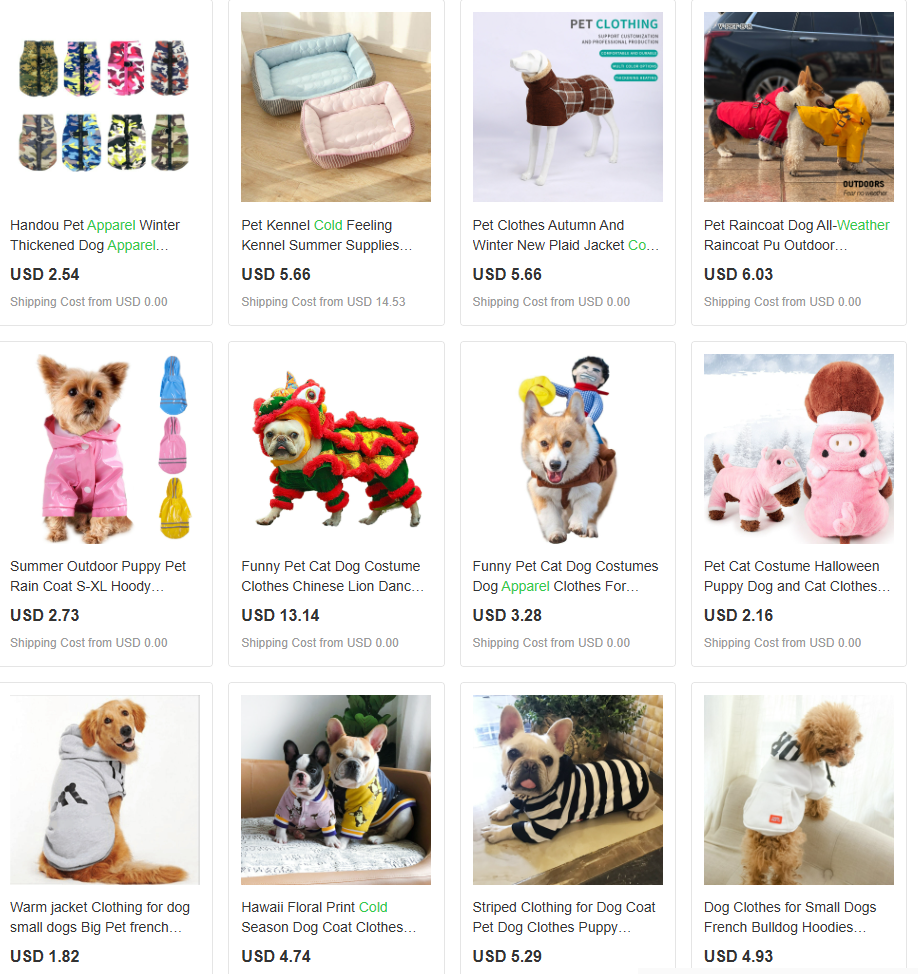
Avoid products that make medical, anxiety-treatment, or safety guarantees. Inspect stitching, small detachable parts, material labeling, washability, and suitability for supervised use. Seasonal prints can create urgency, while neutral designs can continue selling after the holiday.
How to Select Winning Holiday Products
Start with visual gift appeal. A shopper should understand the recipient, use case, or transformation within a few seconds. Favor small, lightweight packages because dimensional weight, breakage, and peak-season surcharges can erase the margin on bulky goods. Products that bundle naturally can increase average order value without forcing a deep discount.
Use a 3x to 4x product-cost markup as a screening target, not a universal pricing law. Build the final price from product cost, shipping, transaction fees, expected refunds, discounts, ad spend, and support costs. A product costing $8 is not automatically profitable at $24 if expedited shipping adds $10 and customer acquisition costs $12.
Q4 product approval checklist
- The product is understandable and demonstrable in short-form video.
- The landed margin survives a realistic holiday ad-cost scenario.
- The supplier can confirm stock, processing time, and restock behavior.
- A sample matches the listing in size, color, finish, and package contents.
- The package is compact enough for the target shipping method.
- Returns, restrictions, and customer expectations can be explained clearly.
Filter suppliers on operating evidence, not catalog size. Ask how quickly paid orders enter processing, whether inventory is reserved, how substitutions are handled, which tracking events are available, and what happens when an item fails inspection. Run a small test campaign before peak week and review delivery time, cancellation rate, support tickets, and refund reasons.
Best Practices for Automated Q4 Order Fulfillment
Manual order copying becomes dangerous when volume spikes. EPROLO describes its platform as forever free, with no monthly subscription fee for connecting and managing stores. Its integrations include Shopify and WooCommerce, and connected workflows can synchronize orders and logistics numbers. WooCommerce sellers should follow the current setup instructions because shipment-tracking support may require a compatible plugin.
Tracking automation reduces missing updates and helps merchants respond before “where is my order?” tickets multiply. It can also provide the shipment evidence payment providers and marketplaces expect, but no app can guarantee that a store will never experience a payment hold. Sellers still need accurate handling times, valid tracking, responsive support, and honest policies.
EPROLO’s official refund policy says it checks every product before delivery. Use that pre-delivery check to catch obvious wrong-item, wrong-color, wrong-size, or missing-component problems before dispatch. Quality control lowers avoidable errors, but it does not replace samples, accurate product descriptions, compliance review, or seller monitoring.
By mid-December, route late gift orders through eligible products already stored in local warehouses. EPROLO advertises 2–5-day local delivery ranges for stocked North American and European routes, while its FAQ notes that many domestic deliveries arrive in 3–7 business days. Actual timing depends on inventory, destination, product, and service. Check the estimate shown for the order before making a customer promise.
How Branded Packaging Increases Holiday Sales Margins
Holiday gifts are judged before the product is used. A cheap plain mailer, visible supplier identity, crushed box, or missing insert can make a reasonable item feel careless. That weakens perceived value and can trigger complaints when the presentation does not match the store’s premium photos.
Branded mailers, tape, labels, hangtags, and thank-you cards make the delivery feel intentional. Keep the design simple and consistent with the storefront. A thank-you card can explain care instructions, offer support, or invite the customer to share an unboxing. Do not make packaging so elaborate that it raises shipping weight or delays dispatch without adding useful value.
EPROLO Fashion Branding Lite costs $19.90 per year, plus applicable per-item material, printing, or sewing fees. The plan supports fashion branding elements such as labels, hangtags, packing bags, gift cards, and tape. Zero-MOQ branding is most clearly promoted for eligible fashion products. For non-fashion holiday dropshipping products, confirm packaging availability, price, and any MOQ with account support before advertising a branded unboxing experience.
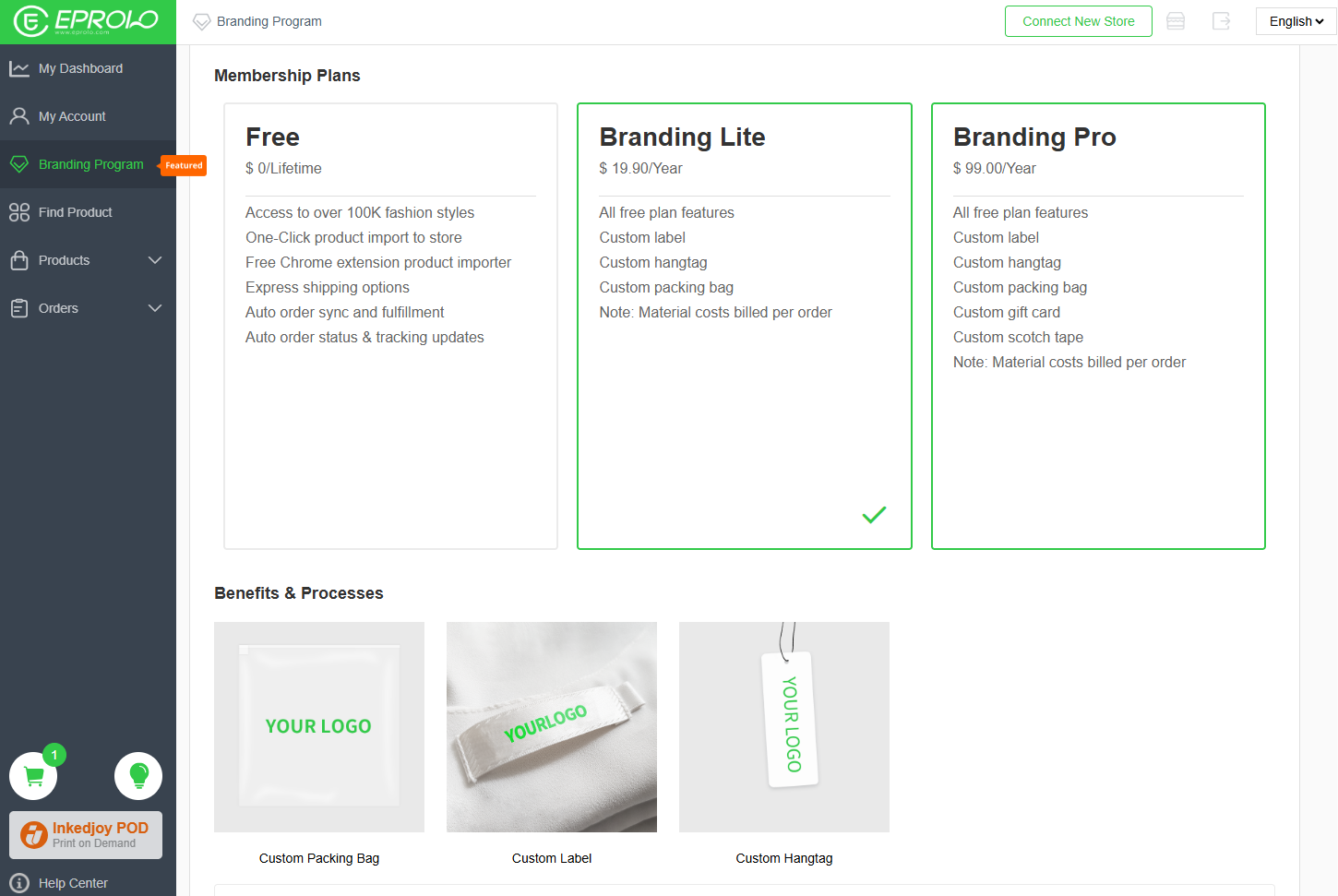
Treat packaging as part of the landed-cost model. If a branded bag and insert add $0.80, decide whether the final retail price, repeat-purchase potential, or bundle presentation justifies it. The objective is not decoration for its own sake. It is a consistent experience that supports the product’s positioning.
Common Q4 Dropshipping Mistakes to Avoid
Launching an untested product in late November
Peak traffic can magnify a weak offer quickly. If the first sample, creative test, or supplier conversation happens during BFCM, there is little time to fix quality, messaging, or fulfillment problems. Complete the first test cycle earlier and reserve November for scaling proven combinations.
Hiding or missing holiday delivery cutoffs
Do not bury delivery timing in a generic policy page. Add route-aware notices to product pages, carts, checkout, confirmation emails, and support macros. When a deadline passes, change the promise immediately or switch the campaign to local inventory.
Scaling an unverified supplier
A low quote is not useful when inventory disappears during peak days. Test response time, sample quality, tracking reliability, stock depth, packaging, and problem resolution. Keep a backup route or substitute product for the store’s largest campaign.
Using revenue instead of contribution margin
Holiday sales can look impressive while profit falls. Review contribution margin after product cost, shipping, ads, discounts, payment fees, refunds, and packaging. Pause products that require constant discounting or expensive support to convert.
Keeping Christmas creative active after intent changes
After the delivery window closes, shoppers shift toward digital gifts, local delivery, parties, travel, organization, and New Year goals. Refresh headlines, landing pages, and bundles instead of continuing to promise a Christmas-morning use case.
FAQ About q4 dropshipping products
What is Q4 dropshipping and when does it start?
Q4 dropshipping covers October through December, but practical preparation starts in late summer or September. The campaign sequence normally begins with Halloween, accelerates through Black Friday and Cyber Monday, peaks around Christmas, and transitions into New Year offers.
Is Q4 a good time to start dropshipping as a beginner?
Yes, Q4 can offer strong shopping traffic, but beginners should start with a narrow catalog and controlled budget. Use automated order and tracking workflows, test samples, publish delivery expectations, and avoid scaling until the product, creative, margin, and supplier performance are proven.
When is the cutoff date for Christmas delivery?
For many standard cross-border express routes, December 10 to 12 is a conservative planning cutoff, not a universal guarantee. Confirm the specific origin, destination, processing time, and carrier service. After the safe window, use eligible US or EU local inventory and display the live estimate.
What is the best pricing strategy for Q4 dropshipping products?
A 3x to 4x product-cost markup is a useful screening target for the best dropshipping products Q4 campaigns, but final pricing must cover landed cost, holiday advertising, discounts, payment fees, returns, support, and expedited shipping. Approve the price only after modeling contribution margin.
How can I add custom packaging to dropshipping orders without buying stock in advance?
Work with a supplier that applies eligible branded materials per order. EPROLO’s Fashion Branding Lite supports no-MOQ fashion branding from $19.90 per year plus customization fees. For custom mailers, thank-you cards, tape, or non-fashion products, confirm SKU eligibility, price, and MOQ before launch.
The strongest trending dropshipping products Q4 2026 campaigns will combine a timely offer with disciplined operations. Start early, select products customers can understand quickly, preserve margin for peak costs, state delivery limits honestly, and move late orders to local stock when available.
Related reading
- 20+ Best Thanksgiving Dropshipping Products to Sell in 2026
- 20 Hot Autumn Dropshipping Products to Sell in 2026
- How to Build a Branded Dropshipping Store Without Holding Inventory in 2026
- The Brutal Truth: 10 Pros and Cons of Dropshipping (What No One Tells You)
- 15 Dropshipping Suppliers for Lightning-Fast Deliveries (2026)
Written by
Josie
Josie is a skilled marketing specialist with expertise in TikTok, Facebook, and YouTube. She excels at audience growth and social media account management, consistently delivering valuable insights across key social marketing channels. Her strategic approach helps brands build meaningful engagement and expand their digital presence effectively.
Editorial note:
Editorial note: This guide combines current EPROLO service information, official retail research, carrier-timing references, and practical Q4 operating guidance. Product ideas and markup ranges are testing frameworks rather than guaranteed demand, delivery, or profit claims. Merchants should confirm live stock, customization eligibility, shipping estimates, compliance requirements, and total landed cost before publishing an offer.